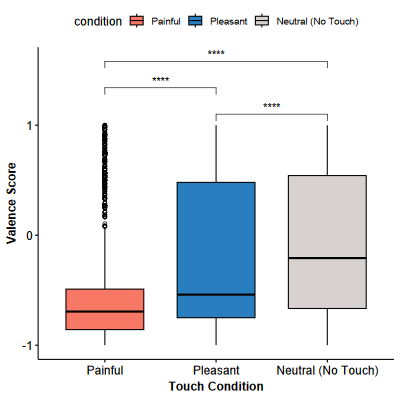
Robots are increasingly implemented across diverse social contexts. Empathy is one construct that has gained focus in human-robot interaction (HRI) research. While previous studies have demonstrated neural activation for explicit depictions of robot pain, this work has primarily used a limited range of human and robot stimuli, and it is less clear how humans perceive a broader range of faces. The current study examined the neural correlates of human empathy for robot pain using functional Near-Infrared Spectroscopy (fNIRS). In Study 1, we conducted an online survey with N = 63 adults to identify and validate photo stimuli of subtle depictions of robot pain. Results found that the painful touch condition stimuli successfully elicited the intended emotion. In Study 2, N = 39 adults completed an fNIRS task in which they viewed and rated human and robot photos in a painful touch and neutral conditions. There were no significant differences in neural responses to human pain in comparison to robot pain, suggesting that similar empathic processes may be employed across agents. We also found evidence suggesting individual differences in self-oriented empathy may shape neural activation for human and robot pain, highlighting the importance of understanding individual differences in HRI.

Chin, J., Haring, K., Pittman, D., & Kim, P (2025). Investigating Human Empathy for Robot Pain using fNIRS, 18 September 2025, PREPRINT (Version 1) available at Research Square [https://doi.org/10.21203/rs.3.rs-7410751/v1]
Read the full discussion of key concepts in our SEAL newsletter
All Researches
The Brain, AI, and Child (BAIC) Center explores how artificial intelligence is shaping children’s development, relationships, and well-being. Our research aims to guide the creation of safer, responsible AI technologies for future generations.


.png)